
Showing posts with label Emotional Education. Show all posts
Showing posts with label Emotional Education. Show all posts
Monday, 6 June 2016
AEFES Home Education & Unschooling Festival
There is a new home education festival with a strong Unschooling ethos. Having been inspired by HESFES, many teens and young adults wanted to create their own festival and so AEFES was born. AEFES stands for Alternative Education Festival and so encompasses not only home education but many other alternative forms of education.They're a community of adults, teenagers and children all working in unity to create a festival where all voices can be heard, all opinions considered and all decisions made in a democratic setting. AEFES believe in trust, faith and community spirit. Working as a team to create something magical for everyone. Tickets can be purchased from http://www.aefes.co.uk/acatalog/AEFES_home_education_festival_tickets.html. If you want to join the community check out the facebook group https://www.facebook.com/groups/516810371859856/


Thursday, 7 May 2015

Sunday, 2 November 2014


Friday, 25 July 2014
The Shame - An Unschooled Drama Project
This is a play written and directed by Anya and her friend and interprets their feelings about bullying and cyber bulling. The film is also in the psychological horror genre, but Anya did not want to use the famous music from Alfred Hitchcock's 1960 film as it would detract from what they were creating.
Friday, 1 June 2012
Liberating Language
The way we use language can
liberate parenting. The right kind of language can build self esteem, inspire
confidence and encourage responsibility. I discovered that by modifying my
language to deal with mishaps, 'misbehaviour' (a word I despise) and feelings
resulted in dramatic changes in the reactions from my children. Here are some examples from Liberated Parents, Liberated Children:
"the milk spilled, we need a sponge" instead of "now look what you did"
"walls are not for writing on. Paper is for writing on" instead of "bad boy! No more crayons for you"
"a scratch can hurt" instead of "stop crying. It's only a scratch"
" I see a purple house, a red sun and a stripy sky" instead of "that painting is beautiful, you're a great artist". Praise is wonderful but where can a child go from 'beautiful' and 'great'. Words that evaluate hinder a child.
"the milk spilled, we need a sponge" instead of "now look what you did"
"walls are not for writing on. Paper is for writing on" instead of "bad boy! No more crayons for you"
"a scratch can hurt" instead of "stop crying. It's only a scratch"
" I see a purple house, a red sun and a stripy sky" instead of "that painting is beautiful, you're a great artist". Praise is wonderful but where can a child go from 'beautiful' and 'great'. Words that evaluate hinder a child.
Thursday, 31 May 2012
Self Esteem - Who Are You?
A poem is a good way to discover who you are. We used the following resource from Kid's Health to write a poem:
Just fill in the blanks on the one below, and you will have done it. Poetry does not have to rhyme you know, but see if you can make a pattern with the beats.
Line 4 will have 7 beats - and so you go on.
You can have a pattern of three lines or four, or however many you like, so long as there is a pattern.
Here's Owen's poem:

Just fill in the blanks on the one below, and you will have done it. Poetry does not have to rhyme you know, but see if you can make a pattern with the beats.
| 1 | (Name) [Beats ] |
Sa - rah 1 1 [2] |
| 2 | (adjectives - describing words) [Beats] | brown haired, friend-ly, chee-ky,
small 1 1 1 1 1 1 1 [7] |
| 3 | (Brother/sister of) [Beats] |
no-one 1 1 [2] |
| 4 | [Beats] |
[7] |
Line 4 will have 7 beats - and so you go on.
You can have a pattern of three lines or four, or however many you like, so long as there is a pattern.
| Name | <><><><><><> </>...................... |
| 4 adjectives (describing words) | <><><><><><> </>...................... |
| Brother/sister of | <><><><><><> </>...................... |
| Who loves | <><><><><><> </>...................... |
| Who feels | <><><><><><> </>...................... |
| Who finds happiness in | <><><><><><> </>...................... |
| Who needs | <><><><><><> </>...................... |
| Who gives | <><><><><><> </>...................... |
| Who fears | <><><><><><> </>...................... |
| Who would like to see | <><><><><><> </>...................... |
| Who enjoys | <><><><><><> </>...................... |
| Who likes to | <><><><><><> </>...................... |
| Who lives | <><><><><><> </>...................... |
| Who would like to be | <><><><><><> </>...................... |
Here's Owen's poem:

Thursday, 12 April 2012
Building Self Esteem - Things To Look Forward To
Recently, we have been engaging in a number of activities focusing on building self esteem. Today, we have compiled a list of things to look forward to. We plan to update the lists each week.


Saturday, 7 April 2012


Thursday, 5 April 2012
Building Self Esteem Using Photography

Photographs have the ability to capture an emotion in just a moment. A photograph also has the ability to capture a moment that someone might not be aware of, showing his or her true personality. Owen and I have created a display of a selection of photos taken in environments that best express Owen’s personality including favorite places, favorite activities, his friends and his pets.
Wednesday, 21 September 2011
Tuesday, 20 September 2011
Moving House & Reducing Stress For Children

I have found that preparing the kids for big events is the most effective way of reducing his stress. I have spent the last few months preparing the kids for the move and including:
- Explaining why we are moving
- Showing him photos of the new house
- Explaining what is involved in the move
- Showing them the calender and reminding him of the move date
- Packing a bag of essential toys, clothes and food/snacks for the first few days.
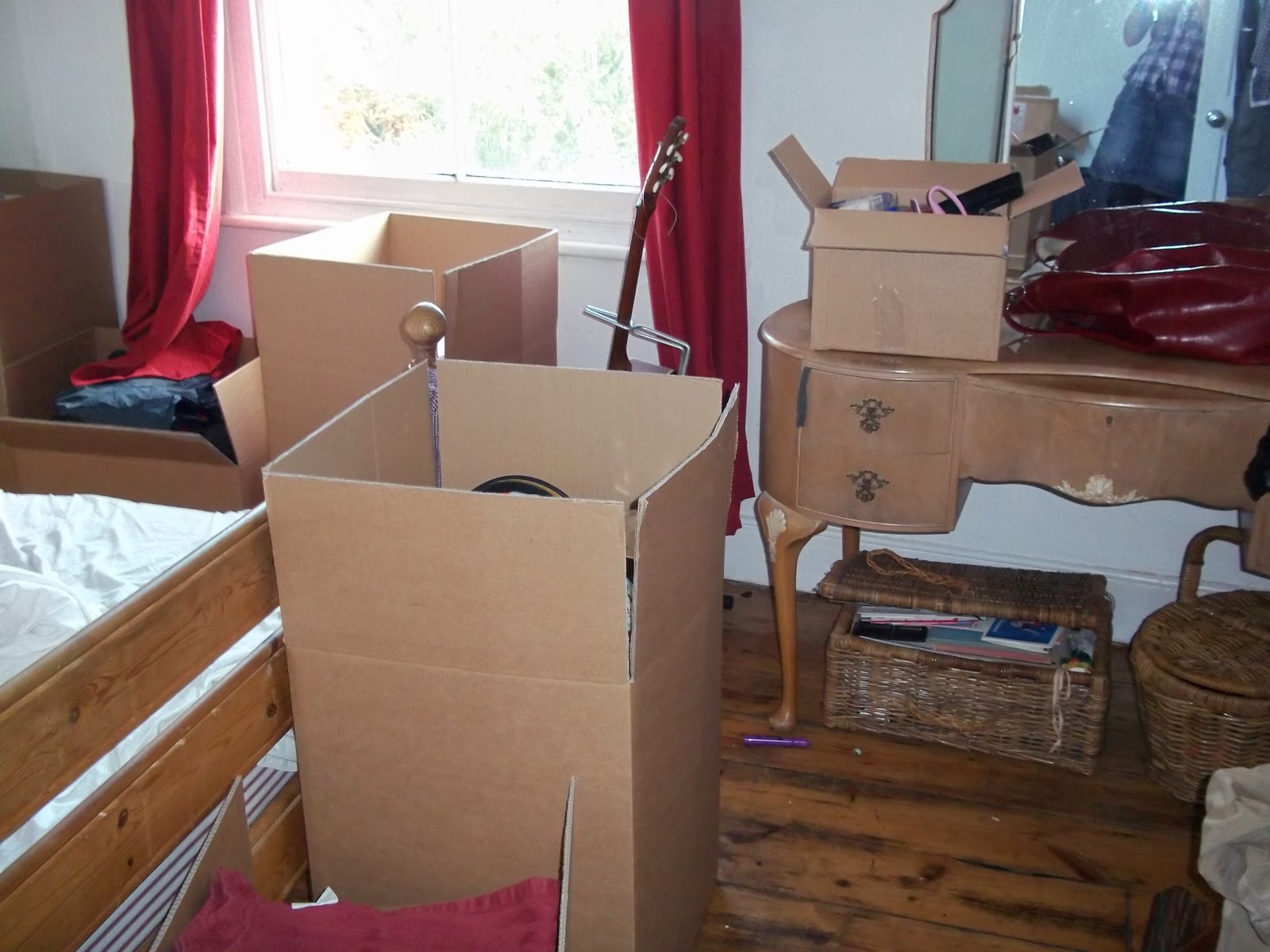
Social stories may also help kids understand what is going on.
On the day of the move we ensure the kids stuff was off loaded first and their beds and essential toys unpacked first.
Sunday, 8 May 2011
Saturday, 7 May 2011
Jealousy In Children

Jealousy and the Theory of Mind Connection
In neurotypical children, that is, children who have no underlying neurological disorder such as autism, self is seen as a separate entity. There is an understanding after the preschool years, that others have thoughts and feelings that do not necessarily match your own. Some empathy can take place, because there is an understanding of feelings that others have, even if that understanding is rudimentary.
In autism, there is a marked difficulty in identifying and recognizing others’ feelings. It can be hard for the child with autism to put himself in someone else’s shoes, because he doesn’t even realize that person has shoes that are different than his own. This is why many children with autism overreact to imagined slights. They aren’t being difficult. They really believe when you accidentally hit them with your elbow that you meant to do it.
Sunday, 20 March 2011
Saturday, 16 October 2010
Ice Skating

Every Friday, Owen and Anya kids join a large group of South London home educated kids for ice skating lessons at Streatham Ice Rink.
Wednesday, 22 September 2010
Ferrets, Pets & Home Education
Our lovely pet ferret Red died in June. Red's death was tough for both kids as they had a special relationship with him. We explained what death meant in different cultures but Owen is a non-theist so found it hard to deal with the literal end of Red's life. However, we have two young crazy, bitey ferrets called Foxy and Freddie. The kids are building new bonds with them but have to be extra careful of their fingers!
Tuesday, 20 July 2010
Resolving Rudeness with Books

My son can often be 'rude'. It is usually when he is feeling excited or impatient but can be when he is stressed or anxious. Reading stories about 'rude' characters that show how a situation may be resolved might help. However, Owen's rudeness is often directed towards adults that have been 'rude' to him or unfair to him. I also am aware that rudeness is cultural and often moralistic and I am becoming increasingly aware that moralistic parenting does not encourages insincerity.
The Elephant and the Baby Baby by Elfrida Vipont
The Three Little Wolves and the Big Bad Pig by Eugenios Trivizas and Helen Oxenbury
Princess, Princess by Penny Dale
Second hand books can be purchased from Abe Books
Monday, 19 July 2010
The Link Between Behaviour & Emotions

A good friend of mine who regularly comments on this blog suggested that I investigate a more creative approach to "managing behaviour". She doesn't feel the term behaviour management is appropriate because the word behaviour is mainly attached to "good" and "bad" and management implies "supervision". The articles I have read demonstrate a strong link between behaviour and emotions. This is backed up by the results of my behavioral diary which showed undesired behaviour being triggered by anger, stress, worry, disappointment and jealously. Therefore, it would make sense that behavior (both desired and undesired) is an outlet for emotions.
I regard myself as "autistic-ish" which has gifted me with many abilities neurotypical people do not have. But I think it has left me less able to understand my own emotions. This presents me with a complex problem if I am to emotionally educate my own children. Emotions are divided into four main categories: Glad, Sad, Mad and Scared. Whilst I support my children's Glad emotions I think I am guilty of trying to "fix" my children's Sad, Mad or Scared emotions through discipline or distraction. Owen and Anya should understand that emotions are not bad. I plan to support my kids in identifying their emotions and help them to understand and respond to their feelings in an "acceptable" way. I am going to try the following strategies to help them identify, explore and understand their emotions.
Working with Images (Help The Aged, Salvation Army, RSPCA, NSPCC)
Feelings Meters/Barometers
Books for Exploring Emotions
Friday, 9 July 2010


Saturday, 26 June 2010
Talking Circles, Talking Sticks & Children

I have decided to try an introduce a Native American Talking Circle to resolve problems and discuss family matters. The idea is we sit in a circle listening to the person who holds a talking stick. The person that hold the stick is allowed to speak for as long as they wish without being interrupted. (In native American culture is is rare that people talk for too long but due to my kids tendency to indulge in long monologues I am going to restrict there talking using an egg timer.) Once they are finished talking the stick will be passed to the next person. Hopefully, this will make the kids feel more secure that they will be listened to without someone butting in.
Subscribe to:
Posts (Atom)