Showing posts with label Autism. Show all posts
Showing posts with label Autism. Show all posts
Wednesday, 21 September 2011

Tuesday, 20 September 2011
Moving House & Reducing Stress For Children

I have found that preparing the kids for big events is the most effective way of reducing his stress. I have spent the last few months preparing the kids for the move and including:
- Explaining why we are moving
- Showing him photos of the new house
- Explaining what is involved in the move
- Showing them the calender and reminding him of the move date
- Packing a bag of essential toys, clothes and food/snacks for the first few days.
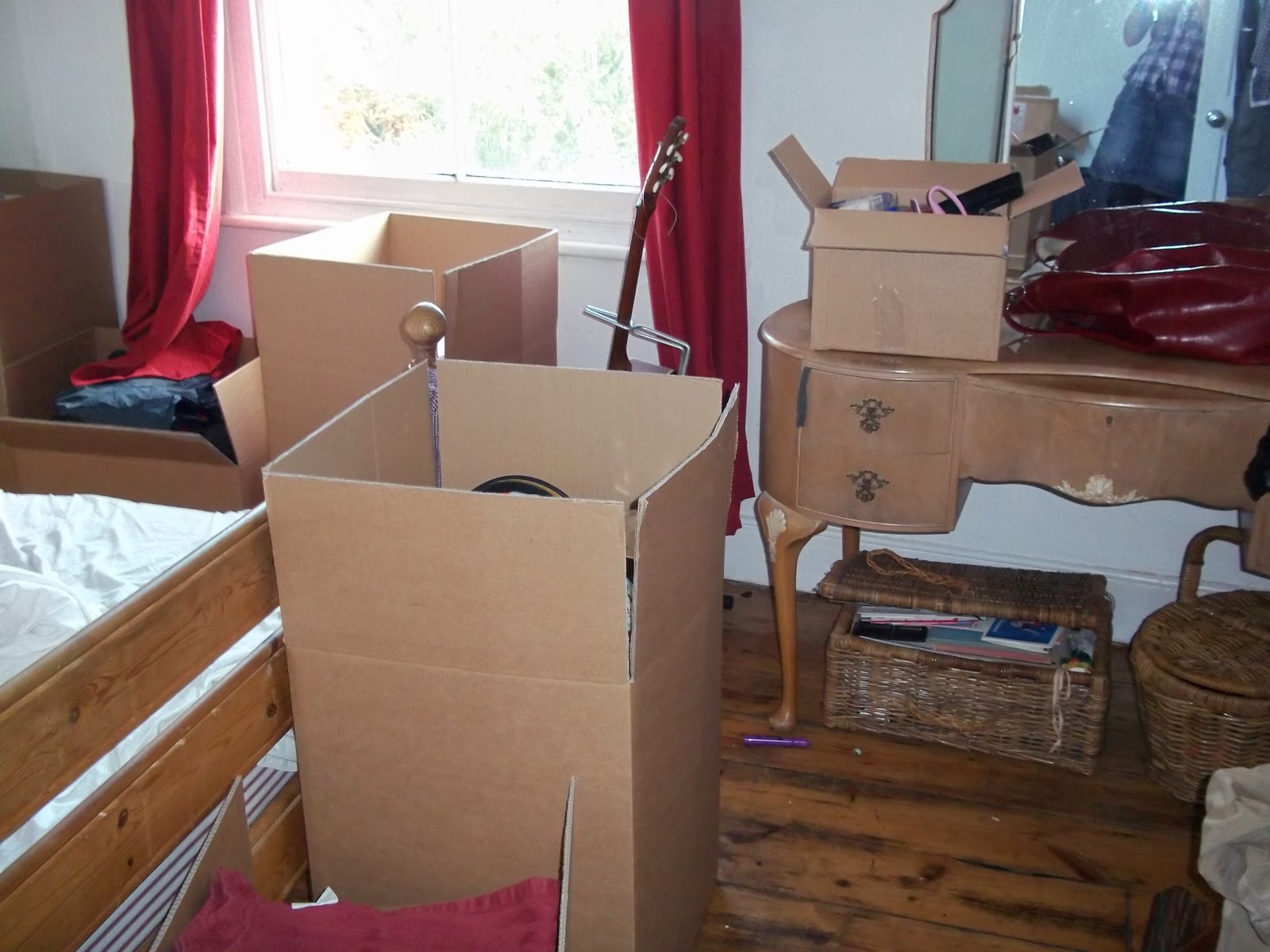
Social stories may also help kids understand what is going on.
On the day of the move we ensure the kids stuff was off loaded first and their beds and essential toys unpacked first.
Monday, 13 June 2011
Music At The Horniman

One of Owen's favourite places is the music room at the Horniman. The museum provides interactive music projections allowing the kids to select and listen to hundreds of instruments. The kids can listen to the instruments using headsets so the room is very quiet, tranquil and very suitable for kids who are sensitive to noise or have auditory processing difficulties. Surrounding the interactive screens are beautifully displayed instruments which are organised and neatly labelled. In addition, the lighting is very dim so is kind to kids with light sensitivities ...
Saturday, 30 April 2011
Hobbies For Autistic Kids
I am trying to work with Owen to find a hobby (other than computers) that he enjoys and is good at and can meet new friends. We have tried a variety of hobbies but Owen hasn't taken to anything yet apart from swimming. The problem with swimming is he doesn't really meet new people as he doesn't want to take lessons or compete. He tolerates horse riding (on the condition I am teaching him) and Taekwondo but is not passionate about either. Other hobbies we have tried include football, ballet, karate. The problems he faces are:
If Archery does not suit him I also have the following ideas:
- Not being able to following instructions
- Poor coordination
- Not been able to work as a team
- Not being able to cope with the noise and chaos of other kids
- Getting upset when other kids discover he is autistic (usually as a result of Anya telling kids because Owen is being odd)
If Archery does not suit him I also have the following ideas:
- Snorkling/Diving
- Warhammer
- Darts
Thursday, 7 April 2011
British Wildlife Centre


A day at the British Wildlife Centre near East Grinstead to find out about all the wonderful British wildlife. We saw wildcats, owls, polecats, foxes, deer, otters, mice, hedgehogs and badgers.
Monday, 4 April 2011
Gardening
I find that encouraging the kids to do a little bit of gardening sparks a general interest in learning. 


Conversations in the garden seems to result in a more inquisitive approach from the kids.

Our 30 min seed planting session included conversations about germination, insects and slugs, the weather, months of the year and Roblox (which features in almost every conversation).
Wednesday, 16 March 2011
Sunday, 26 September 2010
Home School Calling's First Harvest
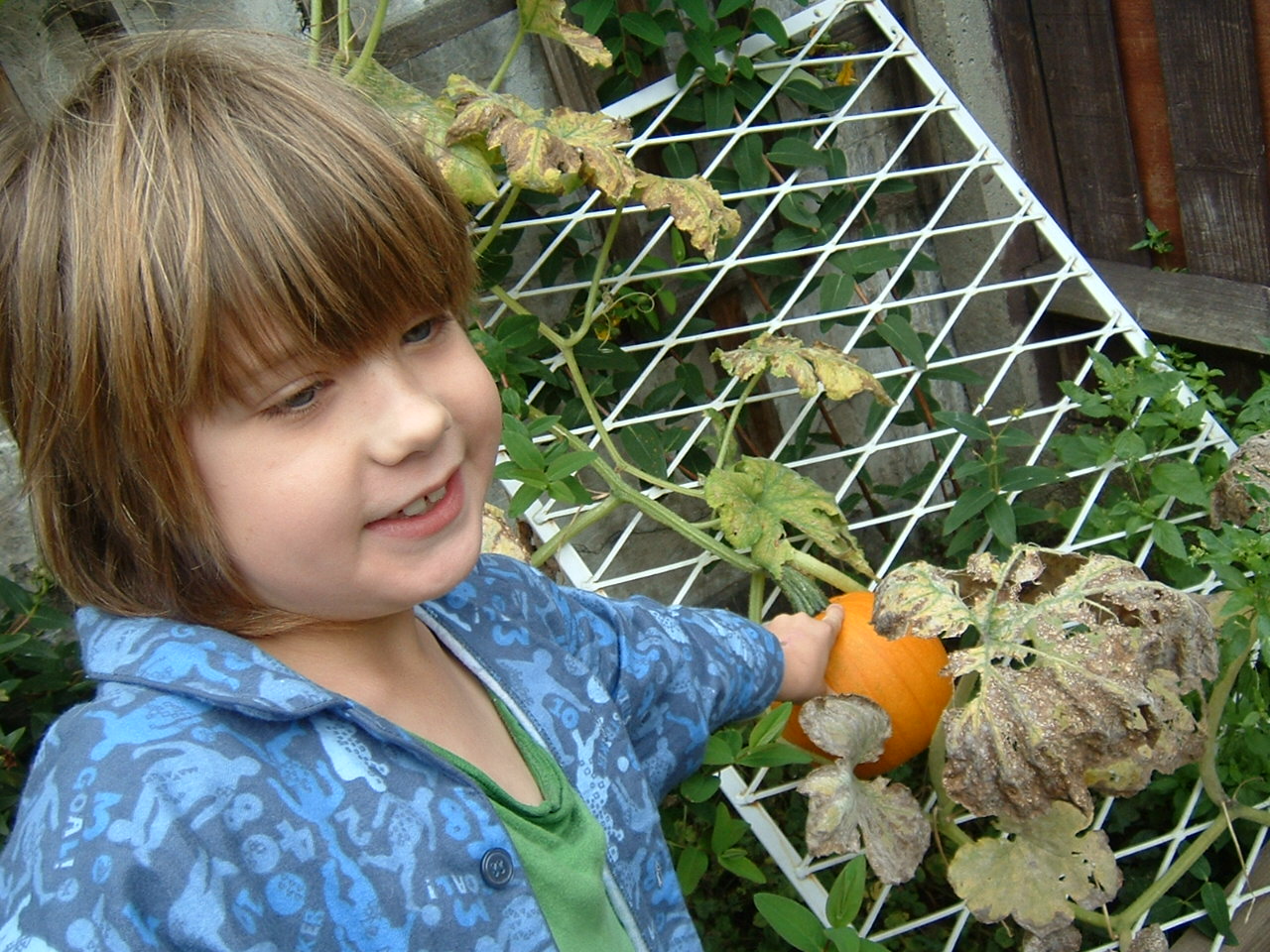

Pumpkins, Courgettes and Tomatoes were a success. Carrots and spring onions were okay and beetroots, cauliflower were a disaster!
Wednesday, 22 September 2010
Ferrets, Pets & Home Education
Our lovely pet ferret Red died in June. Red's death was tough for both kids as they had a special relationship with him. We explained what death meant in different cultures but Owen is a non-theist so found it hard to deal with the literal end of Red's life. However, we have two young crazy, bitey ferrets called Foxy and Freddie. The kids are building new bonds with them but have to be extra careful of their fingers!
Electronic Wizard

Owen expressed an interest in the Electronic Wizard course at HESFES. The first kit is due to arrive at the end of September.
It is a Postal Course providing an adventure into the magical world of electronics, starting with the basics, and rapidly building to more advanced practice. It gives kids an insight into the workings behind technology & helping you understand some of the ‘Magic’ that holds our modern world together.
Wednesday, 25 August 2010
Swimming Lessons at Brockwell Lido
Owen, Anya, Nancy and Amber are all homeschooled kids. This is their first lesson at Brockwell Lido.
Wednesday, 4 August 2010
Work with Wiggle - Kinesthetic Learning

Kinesthetic learners learn best by moving and touching. They are 'hands-on' learners need to experience what they are learning - not just read or hear a lecture about it. Sitting still is a huge hindrance to their learning. Kinesthetic children possess a "hands-on intelligence" that makes our world a better place to live.
Characteristics of Kinesthetic Learners
Here are a few clues that you may have a Kinesthetic child:
•Learns through first-hand experience
•Taps or doodles while listening
•Explores through touch and movement
•Is naturally skilled in physical activities such as sports or riding a bicycle
•Enjoys putting things together and taking them apart
•Uses fingers to figure out math problems
•Tracks with finger while reading
•Sits still for 5.2 seconds at a time!
Ideas I'm Testing Out
Trying resources that can be read aloud, uses manipulatives, or is experimental in nature.
Focusing on activities that include projects, simulations, and real-life applications.
Allowing Owen and Anya to sit on an exercise ball whilst listening or doing an activity.
When reading aloud I allowing my kids to move around the room, doodle, builds with clay or Lego.
Include dramatization, recipes, simulations, creating period art, or building models and games.
Using manipulatives and games for writing, spelling and grammar and maths.
Cook while learning fractions.
Use manipulatives and whole body movements to learn letter sounds.
Science is a great subject for hands-on learners. I will focus on resources that offer plenty of hands-on experiments (not just cut-and-paste activities).
Wednesday, 28 July 2010
OPAL project: an opportuntity to take part in a free educational survey of hedges this autumn

We will be taking part in the Open Air Laboratories (OPAL) project , an educational project being run by Natural History Museum, Imperial College London and thirteen universities and educational organisations across England. This survey will focus on the local biodiversity value of hedges. It will involve 30-45 minutes of fieldwork which can be carried out in gardens or local area. Participants complete activities that assess the hedge’s structure and management, food supply, invertebrate diversity and importance as a wildlife corridor. The survey is structured so that each of the separate components tell a story about the hedge’s importance for wildlife.
For the Biodiversity Survey, a great deal of survey work has been done in the past on hedges in farmland, but no-one knows much about the current national picture of the condition of hedges in urban areas (especially in gardens), so this survey really will add to our scientific knowledge.
Taking part in the OPAL Biodiversity Survey is easy. All you need is safe access to at least one side of a hedge (hedge needs to be minimum 3m in length). This doesn’t need to be a classic farmland hedge of hawthorn – garden hedges (e.g. privet and laurel), a patch of ornamental shrubs at the edge of a car park (if safe to access) or a line of trees with leaves close to the ground will be equally as valid.
OPAL has funding to supply individual survey packs (one per child) to home educators throughout England. If you are interested in receiving survey packs, or if you would like to discuss the OPAL project in more detail, please email opal@field-studies-council.org.
For the Biodiversity Survey, a great deal of survey work has been done in the past on hedges in farmland, but no-one knows much about the current national picture of the condition of hedges in urban areas (especially in gardens), so this survey really will add to our scientific knowledge.
Taking part in the OPAL Biodiversity Survey is easy. All you need is safe access to at least one side of a hedge (hedge needs to be minimum 3m in length). This doesn’t need to be a classic farmland hedge of hawthorn – garden hedges (e.g. privet and laurel), a patch of ornamental shrubs at the edge of a car park (if safe to access) or a line of trees with leaves close to the ground will be equally as valid.
OPAL has funding to supply individual survey packs (one per child) to home educators throughout England. If you are interested in receiving survey packs, or if you would like to discuss the OPAL project in more detail, please email opal@field-studies-council.org.
Tuesday, 20 July 2010
Resolving Rudeness with Books

My son can often be 'rude'. It is usually when he is feeling excited or impatient but can be when he is stressed or anxious. Reading stories about 'rude' characters that show how a situation may be resolved might help. However, Owen's rudeness is often directed towards adults that have been 'rude' to him or unfair to him. I also am aware that rudeness is cultural and often moralistic and I am becoming increasingly aware that moralistic parenting does not encourages insincerity.
The Elephant and the Baby Baby by Elfrida Vipont
The Three Little Wolves and the Big Bad Pig by Eugenios Trivizas and Helen Oxenbury
Princess, Princess by Penny Dale
Second hand books can be purchased from Abe Books
Monday, 19 July 2010
The Link Between Behaviour & Emotions

A good friend of mine who regularly comments on this blog suggested that I investigate a more creative approach to "managing behaviour". She doesn't feel the term behaviour management is appropriate because the word behaviour is mainly attached to "good" and "bad" and management implies "supervision". The articles I have read demonstrate a strong link between behaviour and emotions. This is backed up by the results of my behavioral diary which showed undesired behaviour being triggered by anger, stress, worry, disappointment and jealously. Therefore, it would make sense that behavior (both desired and undesired) is an outlet for emotions.
I regard myself as "autistic-ish" which has gifted me with many abilities neurotypical people do not have. But I think it has left me less able to understand my own emotions. This presents me with a complex problem if I am to emotionally educate my own children. Emotions are divided into four main categories: Glad, Sad, Mad and Scared. Whilst I support my children's Glad emotions I think I am guilty of trying to "fix" my children's Sad, Mad or Scared emotions through discipline or distraction. Owen and Anya should understand that emotions are not bad. I plan to support my kids in identifying their emotions and help them to understand and respond to their feelings in an "acceptable" way. I am going to try the following strategies to help them identify, explore and understand their emotions.
Working with Images (Help The Aged, Salvation Army, RSPCA, NSPCC)
Feelings Meters/Barometers
Books for Exploring Emotions
Friday, 9 July 2010


Friday, 2 July 2010
Auditory Processing - Barnabys Burrow

Owen and Anya have auditory processing problems. Instructions get mixed up in their brain so they often forget part of the instructions or the order of the instructions. I have found this wonderful game for developing their listening skills and developing their ability to listen to questions or more complex instructions. We love playing the game too!
Barnaby’s Burrow has been created by a company called LinguiSystems. It provides practice for the auditory skills of memory, discrimination, closure, and synthesis. The auditory processing tasks and content within each deck of game cards are arranged at increasing levels of difficulty. The 310 game cards are organized into four decks. Within each deck, the items are numbered and arranged from easiest to most difficult:
Saturday, 26 June 2010
Talking Circles, Talking Sticks & Children

I have decided to try an introduce a Native American Talking Circle to resolve problems and discuss family matters. The idea is we sit in a circle listening to the person who holds a talking stick. The person that hold the stick is allowed to speak for as long as they wish without being interrupted. (In native American culture is is rare that people talk for too long but due to my kids tendency to indulge in long monologues I am going to restrict there talking using an egg timer.) Once they are finished talking the stick will be passed to the next person. Hopefully, this will make the kids feel more secure that they will be listened to without someone butting in.
Tuesday, 22 June 2010
A Tribute To Red The Ferret


Owen and Anya's beloved pet ferret Red died this month. We found him three years ago in my new warehouse in Brixton. Mark (my husband) didn't want to keep him as he was frightened of ferrets. Red turned out to be incredibly gentle and great fun.
Owen used to communicate his thoughts and feelings to Red. Both the kids are very upset but Owen is particularly sad. The kids have learned a great deal from Red including the importance of nourishment, care, cleaning, vaccinations, play and finally death. This concept is tough for Owen as he is a non-theist and so can't be fobbed of with stories of pet heaven.
Subscribe to:
Posts (Atom)