Over the past 2 years Owen has been working on passing GCSEs for college. It is fairly common for home educated children to start taking their GCSEs early and then take a few a year rather than take them all in year 11. This is partly due to cost as home educated families have to pay for their children to sit GCSE and the average cost is around £150 per GCSE. Home educators also need to find the time and resources to guide their children through the GCSE which takes a great deal of time and planning. We discovered that a good knowledge of the mark scheme is pretty much as important as covering the actual content. There are very specific ways of answering questions in order to obtain good marks. The HE Exams WIKI is an excellent resource for home educated children wishing to sit formal exams.
Owen has managed to pass all the GCSEs required for his college course with good grades. He will be studying BTEC Computing and A Level Maths at college. Our home education journey with Owen is now complete and has been an rewarding and incredibly wonderful experience.
Anya passed a couple of GCSEs this year and will take a few more next year with the hope of being offered a place into music college.
Showing posts with label Math. Show all posts
Showing posts with label Math. Show all posts
Saturday, 1 September 2018

Thursday, 30 August 2018
Beyond Home Education
After 9 years of autonomous home education my son and daughter made a decision to take GCSEs as they wanted to go to college and take Level 3 qualifications. My son split his GCSEs over two years and passed 6 GCSEs plus his Level 2 Art. He will be starting college in a few days to study BTEC computing and A Level Maths. My daughter took 2 GCSEs this year and passed them both. She will be taking a few more GCSEs next year and hopes to go to music college the year after.
Moving from autonomous home education to following a strict GCSE syllabus and learning exam techniques has not been easy but both my kids have been very motivated to pass and achieved fantastic results.
Moving from autonomous home education to following a strict GCSE syllabus and learning exam techniques has not been easy but both my kids have been very motivated to pass and achieved fantastic results.
Tuesday, 23 February 2016
Tuesday, 30 December 2014
Learning About Geometry
So much Maths can be explored through everyday living. For example, our next door neighbours are planning an extension which will reduce the light in our home. We have been exploring the implications of light resulting from the proposed the extension. It is a good opportunity to look at angles and basic trigonometry.

Saturday, 1 November 2014
Learning Maths Through Exchange Rates & Foreign Currency
Since Unschooling I am always surprised at how much can be learnt by just getting out there and living. We have travelled around Europe, Japan and recently returned from New York. There is no need to have a Maths lesson on currency and exchange rates because the kids learn by using the local currency and understanding how it relates to our own currency. In an Unschooling way we noticed how to use of Dollars led to all kinds of conversations about the Economy, Recession, Quantum Easing and many other topics.

Friday, 11 April 2014
Car Boot Sales & Maths
Anya and I have recently started selling vintage jewellery at car boot sales. We have both invested in mixed lots of jewellery purchased at auctions. Anya has purchased her own jewellery using her pocket money and savings. Anya demonstrated a real ability to communicate with the customers, maths and business skills at the car boot sale. She was able to work out her own prices based on what she paid, upsell by offering customer discounts for bulk buys, work out the total costs on large sales, check for fake notes and the correct change.


Thursday, 2 January 2014
Monopoly: Cash Flow, Risk & Negotiation Skills
The kids were given an Adventure Time Monopoly game for Christmas. Monopoly is such a great game for learning many Maths and Business skills. When the kids were younger the game helped them with basic counting skills. As they have grow older they have learnt that cash flow is crucial to be successful in monopoly and if they spent too much money on property they are unable to pay rents. The game is all about negotiating and making deals. Using proper negotiation skills are vital in the game. In the game you must take risks, if you don’t take risks you will not win. But some risks result in losing the game too.

Thursday, 19 September 2013
Learning About Mean & Averages
My kids do not have any scheduled Maths lessons. When they want to learn something they ask me. For example my daughter recently wanted to learn how to add a list of large numbers so I taught her long addition. When they are keen and ready I find they are able to learn most things quickly. But there is also a great deal of Maths in every day life. For example I run a small business and my son often helps me book the post in. To do this he needs to weight each bag and then work out the average weight of each item and select the right Royal Mail code depending on the size of the parcels. As a result of this he is pretty confident with means and averages.

Wednesday, 14 August 2013
Roblox: Understanding Profit & Loss
Owen and Anya love to play Roblox. The game allows them to develop their own games. In addition, they are able to buy virtual items such as hats and hair using a virtual currency called Roblux. Some items that are sold become rare and limited items and if bought at the right price can be resold at high profits. The kids regularly buy and trade limited items to earn Roblux which they can then use to buy other items or develop and market their own games.

Thursday, 11 July 2013
Making Ginger Beer
For this, you will need screw-top, 2-litre plastic bottles, which you have cleaned thoroughly with boiling water."
Makes 2 litres
Ingredients
- ¼ tsp brewer's yeast
- 225g raw cane sugar
- 1½-2 tbsp finely grated fresh root ginger
- Juice of 1 lemon
- 1 good tbsp honey
METHOD
- Add the yeast to the bottle* (see warning below). With a funnel, pour in the sugar.
- Mix the grated ginger with the lemon juice and honey.
- Pour the ginger mixture through the funnel into the bottle. Now fill the bottle about ¾ full with water, put the cap on and shake the bottle until all the sugar is dissolved.
- Top up the bottle with water, leaving a 2.5cm gap at the top, to allow for production of gas. Cap the bottle tightly, then place it somewhere warm. Leave it for about 48 hours. Once the bottle feels very hard and has no give in it, your beer should be ready.
- Place the bottle in the fridge for several hours to stop the yeast working. Once the beer is thoroughly chilled, pass it through a fine sieve and serve.
Warning
We advise you use plastic bottles rather than glass to avoid explosions. A really active mixture can produce lots of gas if left for longer than 48 hours, so do remember to let it off reguarly!


Wednesday, 8 May 2013
Train Times & Planning Our Trip in Japan
We recently spent 3 weeks travelling around Japan. The kids were very involved in helping us work out train times and planning transport connections. Planning our journey presented particular problems due to the train and bus time tables being in the Japanese characters.

Wednesday, 1 May 2013
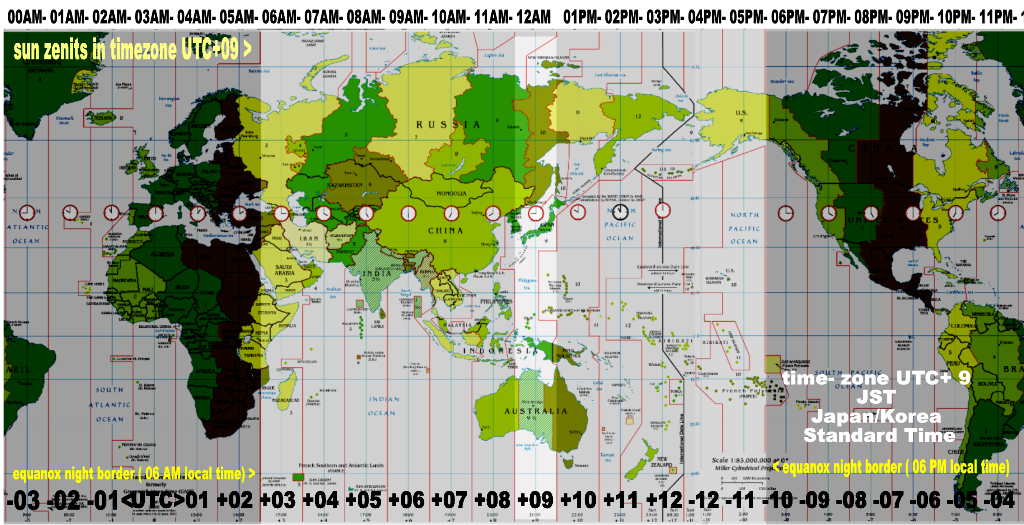
Travelling To Japan & Time Zones
I have noticed how travelling sparks a real interest in topics relating to Maths including time zones, travel time tables and currency and exchange rates. The kids took a real interest in time and were fascinated about how we flew towards the night and arrived in the morning in Japan when it would have been the previous evening in London.
Tuesday, 15 November 2011
Chess - The Right Brain Game
Chess is a great right brain game. The right brain is linked to the "inner" senses of perfect memory, computer-like math calculation, rapid language acquisition, perfect pitch (music abilities), and intuitive thought.


Tuesday, 18 October 2011
Number Lines & Weighing

Last year, I posted about Anya’s Numerical SequencingProblems. She learnt to count to 21 by labelling the stairs. We also used number lines which I think fantastic method of teaching Maths. We look at the number line and count forward and back using it. Anya finds it really hard to remember which set of numbers follow which eg once she gets to 59 she can’t remember 60 comes next. Counting in Tens has helped but she hasn’t quite made the connection between the Units that come in between the Tens.
Scales are a little like a number line too and by weighing ingredients, Anya can see the value of the scales gradually increasing. She then has to understand that if she goes over the required amount some of the ingredients need to be removed.
Friday, 14 October 2011
BrainPOP - Our Favourite Educational Site
Last year we subscribed to Brain Pop Jnr. This year I have decided to invest another $99 into Brain Pop which is aimed at older kids. The science provided by Brain Pop Jnr is a little basic for Owen but the science videos aimed at secondary student on Brain Pop will suit him better.
Thursday, 16 June 2011
Fruit Scones


 Cooking is great fun and measuring and weighing provides the perfect maths lesson.
Ingredients:
- 75g butter or marg
- 225g self raising flour
- Pinch salt
- 25g Raw Cane Sugar
- 75g sultanas
- 150 ml milk
- Little milk
Preparation:
- Heat the oven to 400F/205C/Gas 6
- Grease and flour a baking sheet.
- Put flour into a bowl then add the butter, baking powder and salt. Quickly rub the butter into the flour until the mixture resembles fine breadcrumbs. Add the sugar and sultanas and stir.
- Stir in enough milk to make a soft, pliable dough.
- Turn the mixture on to a floured board then lightly roll out to 2cm / 3/4" thick.
- Cut rounds with a 7.5cm /2" cutter or cut into triangles with a sharp knife.
- Place on the baking tray and brush with the beaten egg and milk mixture. Bake near the top of the hot oven for 15 minutes or until golden brown and well risen.
Friday, 24 December 2010
Numerical Sequencing Problems
When Anya left school at 7 she was barely able to count or write to 20. I understand children all learn at different stages but what concerned me was that I had been battling at home to assist Anya to count but the school seemed unaware that she had problem with Maths at all! Owen leant to count fairly ‘naturally’ and naturally understood decimal schema which allowed him to count in units, tens, hundreds and then thousands. As with most children, he didn’t need any special reinforcement to facilitate counting.
I have been working with Anya and another home educated girl who also has difficulties with counting. They are not able to ‘organically’ learn to count like most children. They need imagination and hand on exercises to remember. Both girls are good with money and seem to demonstrate a clear understanding of the value of each number but cannot remember sequencing and confuse the names or certain numbers.
Anya is a kinaesthetic learner so needs to 'do' in order to learn. We have been labelling the stairs with numbers. The stairs are a really good resource as they go up along with the numbers and so reflect an increase in value. After mastering the sequence of steps from 1 - 11 us started labelling the stairs from 4 to 15 etc. I tend not to stop at obvious points such as 10 as it is these point that present most difficult to Anya, perhaps because these were break points at school. After about a month, Anya became confident with numbers up to 20 (although she does still confuse 12 and 20).


I have been working with Anya and another home educated girl who also has difficulties with counting. They are not able to ‘organically’ learn to count like most children. They need imagination and hand on exercises to remember. Both girls are good with money and seem to demonstrate a clear understanding of the value of each number but cannot remember sequencing and confuse the names or certain numbers.
Anya is a kinaesthetic learner so needs to 'do' in order to learn. We have been labelling the stairs with numbers. The stairs are a really good resource as they go up along with the numbers and so reflect an increase in value. After mastering the sequence of steps from 1 - 11 us started labelling the stairs from 4 to 15 etc. I tend not to stop at obvious points such as 10 as it is these point that present most difficult to Anya, perhaps because these were break points at school. After about a month, Anya became confident with numbers up to 20 (although she does still confuse 12 and 20).


Sunday, 14 November 2010
Brain Pop Jnr - Educational Videos
Brain Pop Jnr was recommended to me by another home educator. It is my favourite educational site. Owen and Anya love the site and spend hours watching the videos. There are free videos but it is worth paying $85 for a years membership.
Subscribe to:
Posts (Atom)